Are we focusing on the wrong part of cleaning drones?
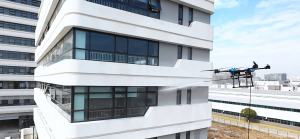
When people talk about cleaning drones, most discussions focus on the spraying system:
- Oscillating spray guns
- Fan-shaped nozzles
- Wider spray coverage
These features are important.
But in my view, they are not the main factor that determines cleaning performance.
What really matters is whether sufficient cleaning energy reaches the surface.
From what we’ve observed, three factors deserve more attention:
 Pump performance
Cleaning height is not only a drone problem.
It is largely a pump problem.
Higher pressure combined with smaller-diameter hoses can help maintain effective water delivery at greater heights.
 Maintaining cleaning pressure
Many solutions focus on covering a larger area.
However, cleaning effectiveness often depends on maintaining pressure on a smaller target area.
Sometimes a drone moving horizontally over a limited range can achieve better results than simply maximizing coverage.
 Water quality may be more important than detergent
This point is often overlooked.
In many cleaning scenarios, properly filtered water—and in some cases heated water—can improve cleaning performance significantly.
Poor water quality can reduce cleaning efficiency regardless of how advanced the spraying system is.
For me, the future of cleaning drones is not just about smarter spraying mechanisms.
It is about optimizing the entire cleaning process:
- Water delivery
- Pressure management
- Water treatment
- Operational efficiency
The nozzle may be the most visible component.
But it may not be the most important one.
What do you think is the biggest challenge facing cleaning drone technology today?
As drone cleaning technology continues to evolve, improvements in the overall cleaning system—not just spray nozzles—will likely determine which solutions deliver the best results in real-world operations.
Interested in drone cleaning technologies?
Discover more expert articles in the Drone by Nature Knowledge Hub.